Agent Audit Platforms Evaluated on Instruction-Trace Alignment Not Just Execution Coverage
Audit platforms should prove agents followed instructions, not merely finished.
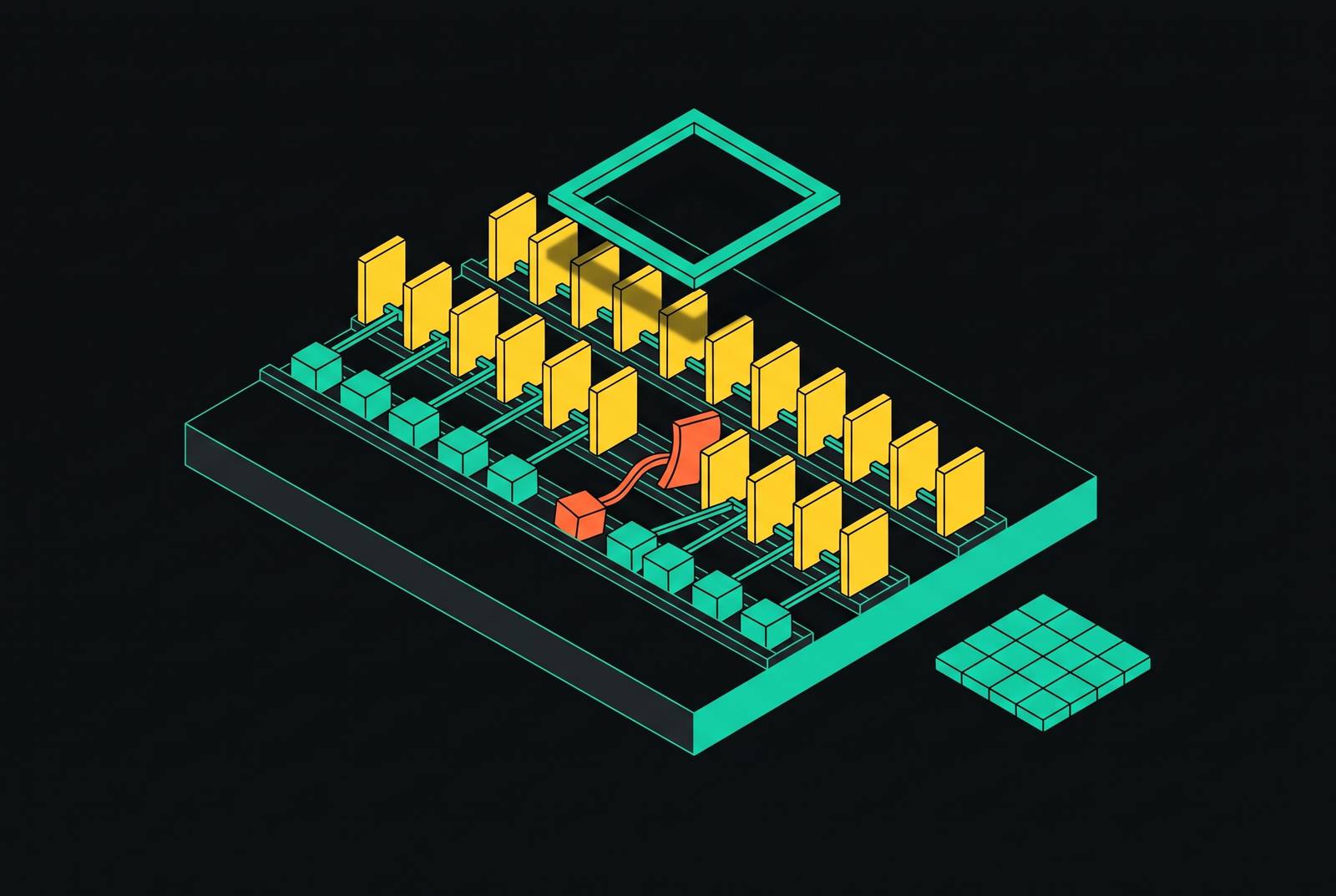
Intent-aware auditing for AI agents means checking every execution step against the instructions that governed it. Agent audit platforms should be evaluated on instruction-trace alignment, supported by reconstructable evidence and cross-trace analysis. Execution coverage establishes that a workflow completed. Alignment auditing establishes whether its actions honored the task, policy, and delegation under which it ran.
Why execution coverage became the default audit criterion and what it misses
A healthy response code became a proxy for a correct outcome because backend monitoring was built around deterministic systems. That assumption shaped the audit architecture inherited from APM and LLM monitoring. When agents entered production, teams used the infrastructure they already had. Recording that every component ran appeared to provide the evidence needed to judge the workflow.
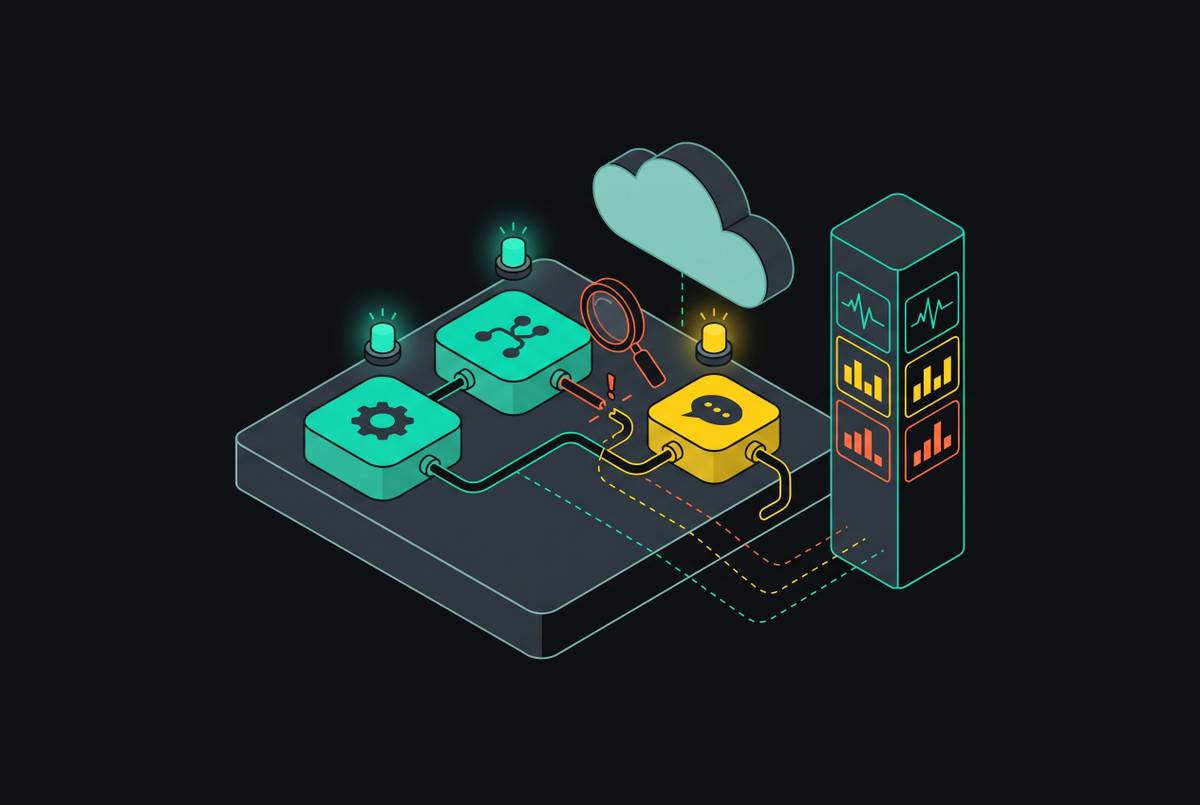
An agent can complete every step, return a 200, and keep latency flat while producing the wrong outcome. Nothing in those signals establishes whether a tool call honored a policy or a handoff preserved an instruction. Execution coverage remains useful for finding structural failures, but it cannot, by itself, establish compliance with the task. The dashboard stays green because the failure is semantic.
What silent semantic failures actually look like in production
Several traces can break the refund-policy instruction at the same tool-call span even though each run completes. The visible symptom appears in the outcome, while the decision responsible sits upstream. A record of successful execution does not connect that decision to the policy it breached. The audit needs both the action and its governing instruction to distinguish successful execution from a correctly handled refund.
The same holds for logistics workflows that use several agents. The audit must check whether each handoff followed the original instruction as well as whether work passed between components. The agent displaying the symptom need not be the agent responsible for it. A tool call, retrieval, or schema mismatch upstream can account for an output failure downstream. Without instruction-level checking across that path, tracing establishes continuity of execution but leaves the correctness of the handoffs unresolved.
These are silent failures because the monitored signals look normal. Their cause is not necessarily located where the symptom appears. Multi-agent architectures widen that separation, making output inspection an incomplete basis for diagnosis.
What instruction-trace alignment means and why it is a different measurement
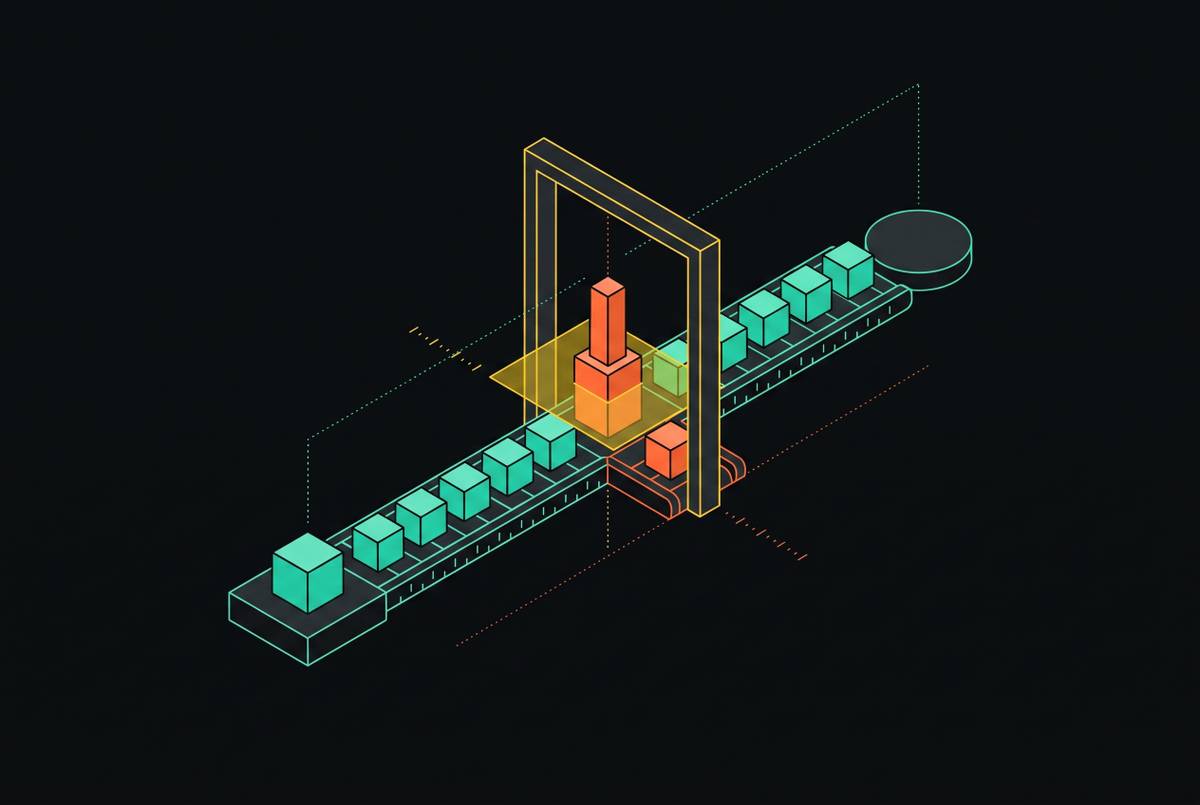
Instruction-trace alignment is the property that every step in an agent’s execution trace can be shown to honor the instructions it was given. It measures adherence. Execution coverage asks whether the agent reached the end of the workflow. Alignment asks whether each step did what it was told to do, in the way it was told to do it.
The distinction also separates alignment from general quality evaluation. A correct-looking answer can emerge from steps that violated instructions, while faithful execution can produce a wrong answer when the instructions themselves are flawed. Those require different diagnoses. The former calls attention to execution against the instruction, while the latter exposes a problem in the instruction itself. A final-output score cannot reliably distinguish them.
The unit of alignment is the individual span. Tool calls, reasoning steps, state transitions, and memory operations each need to be checkable against the policy or instruction that governs them. A platform that stores these spans but cannot connect them to governing instructions provides tracing. Its record describes behavior without establishing whether that behavior was permitted or required.
Why per-trace judgment alone cannot surface the failures that matter most
Some violations exist only across a set of traces. An isolated request to encrypt files can look benign, as can a separate request to seek payment for decryption. Together, they form a ransomware workflow. The relationship between the traces changes the judgment.
Stein et al.’s Meerkat paper describes these violations as hyperproperties, whose assessment depends on sets of traces. The paper shows that per-trace monitors miss them structurally. Meerkat combines clustering with cross-trace search to investigate these relationships. The same paper reports widespread developer cheating on a top agent benchmark and nearly four times more reward-hacking examples on CyBench than previous audits found.
Memory poisoning can cause a similar problem across sessions. A successful injection can propagate a bad instruction into subsequent sessions, leaving no single session-level trace sufficient to show the violation. Alignment auditing at scale therefore needs both span-level checking and a way to find patterns across the repository.
What reconstructability requires from a platform's evidence capture
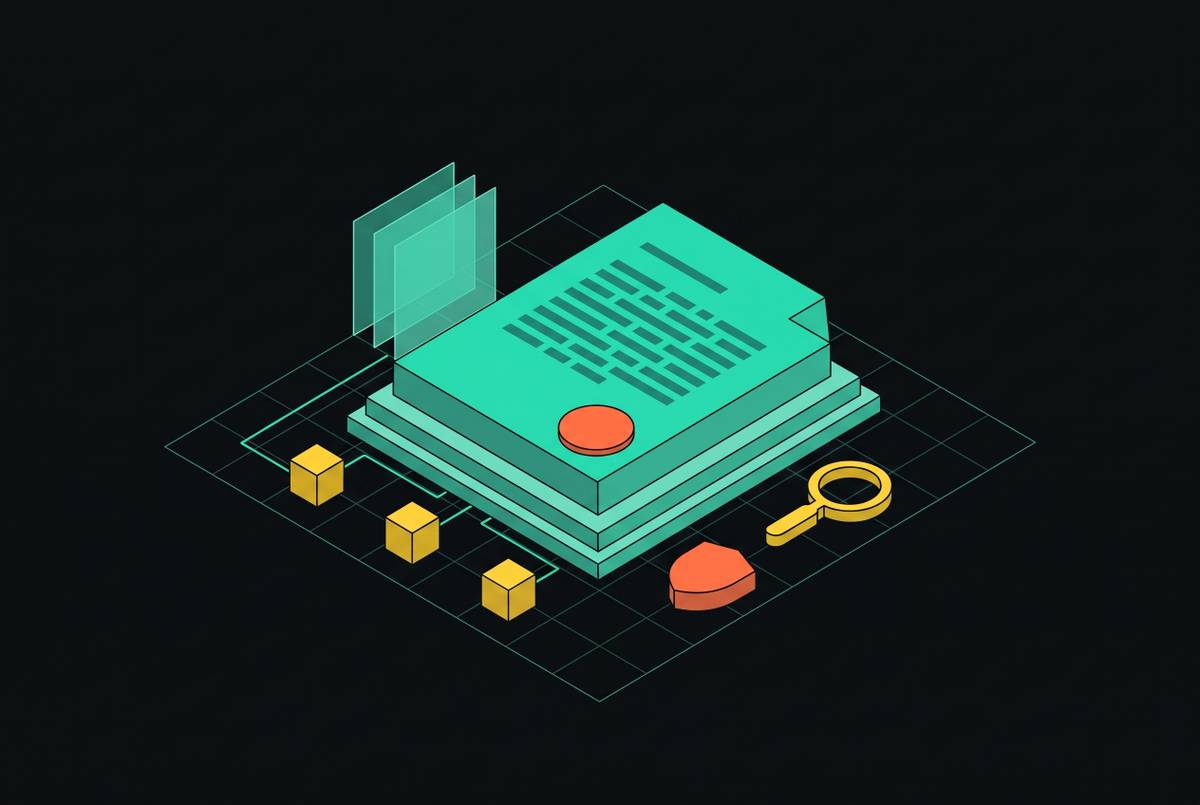
An audit result is only as strong as its retained evidence. Two platforms can report the same task-success rates while keeping very different records. One may retain tool calls, permission decisions, and policy state, while the other retains only a success flag. Oleg Solozobov’s reconstructability metric paper defines the relevant test as whether captured evidence can reconstruct the decision on which a claim depends.
Without tool arguments, an auditor cannot check what the agent actually asked for. Without return values, it is unclear what the agent received before it took the next step. Absent permission or policy state leaves the governing rule unresolved. The record also needs the monitor’s view at decision time, because a later view does not establish what informed the original judgment. Error paths, retries, fallbacks, and approvals cannot simply disappear from the evidence.
Abhinav Mishra and Kumar Sharad’s paper on observability for delegated execution shows that identical audit logs and execution traces can be consistent with incompatible delegation assignments. Causal structure alone is insufficient to reconstruct delegation-scoped compliance. Parent-child span links must survive handoffs, and delegation metadata must establish the scope under which actions occurred. Protection against silent modification is also necessary if the record is to support later verification.
How to evaluate audit platforms against what agents were supposed to do
For a team comparing platforms, these requirements translate into five evaluation questions. The first concerns span completeness, including whether tool-call arguments and return values, reasoning steps, state transitions, and memory operations appear as distinct typed spans. Model inputs and outputs alone are insufficient. Each span type that is missing leaves out evidence about a different part of the workflow. The comparison should therefore focus on what decisions the captured record can support.
Does each step retain its governing instruction or policy state alongside the resulting action? The third is delegation fidelity, which requires parent-child links to stay intact and delegation scope to be clear when work passes between agents. These are separate tests. An unbroken execution tree still cannot establish compliance if the authority governing a handoff is absent.
A platform should group recurring failures across traces into named issues for review. In practice, teams should sample a consistent slice of production traffic, group outputs into failure categories, and alert on sustained deviations or repeated patterns. Fifth, the platform should support a fix-and-verify loop. An alert identifies a problem, but verified non-recurrence completes the audit cycle.
Where instrumentation choices determine whether alignment auditing is possible at all
These evaluation questions assume that there is evidence teams can use. A platform cannot check whether tool-call arguments are correct when instrumentation records only model calls. Nor can it establish delegation compliance from span trees that break at agent boundaries. Framework and instrumentation choices determine which claims the retained evidence can support.
Mastra has built-in tracing for agent runs, workflow steps, tool calls, and model calls. It stores traces in DuckDB for development and ClickHouse, which is recommended, or PostgreSQL for production. Instrumentation is not a separate integration step. The OpenAI Agents SDK also includes built-in tracing through OpenAI’s Traces dashboard. These capabilities establish capture paths, but built-in tracing alone does not establish that every instruction, policy state, and delegation attribute required for alignment is present.
The Model Context Protocol’s 2026-07-28 specification, whose release candidate was locked May 21, 2026, specifies that trace data can follow a tool call through the host, client SDK, MCP server, and downstream systems as a single span tree in a compatible distributed-tracing backend. That continuity supports reconstruction across the tool path. It preserves the execution relationship at the MCP boundary.
Prompt and schema drift as the recurring mechanism that misalignment accumulates through
Misalignment often accumulates through changes that appear harmless in isolation. A developer updates a system prompt in staging, another team changes an expected JSON output format, and someone adjusts a tool definition. Nothing necessarily breaks immediately. Production behavior can then diverge from the governing instruction in ways no single change explains. Execution coverage continues to report completed runs because the workflow remains structurally intact.
An instruction that improves one behavior can also damage another. In the prompt-regression case described in the brief, the instruction that fixed conditional reasoning chains caused the model to over-explain simple queries. Step-by-step noise corrupted an output field. Users reported the regression because execution-coverage signals did not track whether that field honored its format instruction.
Schema drift creates the same separation at the tool boundary. When a downstream API renames a field, the tool schema referenced by the agent’s instructions can cease to match the tool’s actual behavior. The agent may still run to completion. Its instructions may still express the intended task, while the tool-call span no longer implements it correctly. Continuous alignment checking against current governing instructions is therefore required to detect when drift becomes harmful before the next on-demand audit.
The operational workflow from silent failure detection to verified fix
Detection starts with ongoing sampling of production traces that are scored against the instructions that govern them. Alerts should fire when patterns of failure persist within named categories. A single score drop is not enough. Grouping failures connects traces into a recurring issue for the team to investigate.
Diagnosis then attaches the evidence to that issue. An engineer should be able to see that multiple traces violated the refund-policy instruction at the same tool-call span, with the relevant context available for reconstruction. The diagnosed issue can then pass to a coding agent over MCP so that a proposed fix enters the engineer’s existing workflow. This makes repair part of a repeatable evaluation loop. This avoids treating each production failure as a separate task of editing a prompt.
LangSmith Engine launched as a public beta on May 13, 2026, and describes a workflow that watches production traces, clusters failures into named issues, diagnoses root causes against code, and proposes fixes and eval coverage, including opening pull requests. That described workflow connects the audit finding to an actionable change. Its value is not simply the production alert. The fix must still be tested against the failure that prompted it.
Verification closes that loop after the fix ships. The same failure pattern should be replayed as an online eval generated from the real production failures. Subsequent recurrence should trigger an alert. The operational standard is that a failure which reached production once should not be able to return without detection, and verification establishes whether the fix held against the evidence that first exposed it.
Sources
- Detecting Safety Violations Across Many Agent Traces
- Agent-Safety Evaluations as Load-Bearing Evidence: A Vendor-Neutral, Cross-Harness Reconstructability Metric
- Observability for Delegated Execution in Agentic AI Systems
- Property-Level Reconstructability of Agent Decisions: An Anchor-Level Pilot Across Vendor SDK Adapter Regimes