The Enterprise Governance Motion That Treats the System Prompt as the Compliance Record
Prompts state intent, but only traces and runtime controls prove compliance.
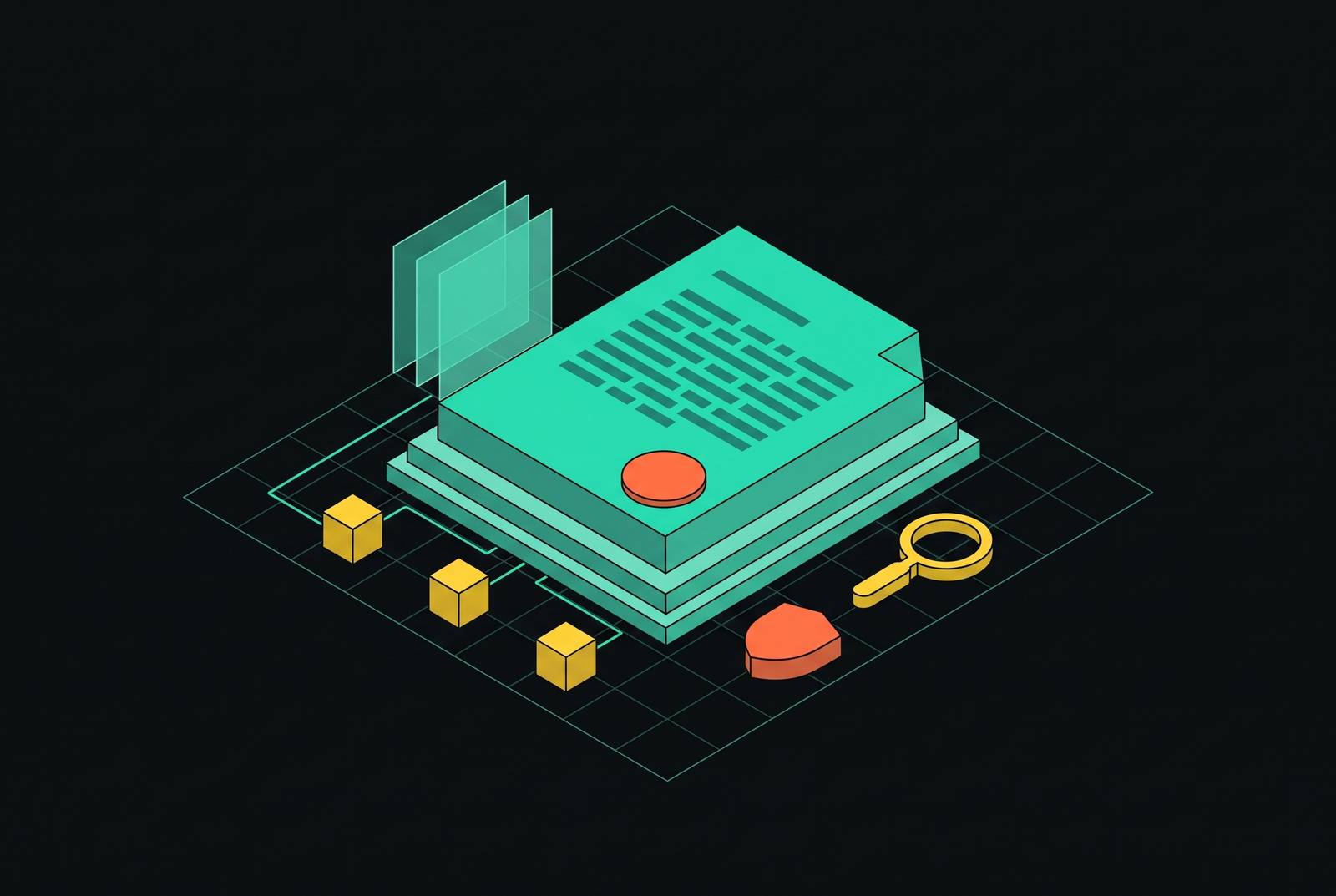
Intent-aware auditing for AI agents compares production execution with the instructions and policies the agent was supposed to follow. The enterprise motion to treat the system prompt as the authoritative compliance record works only when that prompt is paired with execution traces and continuously audited. The prompt establishes intent, while runtime controls and evidence establish whether the agent complied.
Why enterprises are reframing the system prompt as a governance artifact
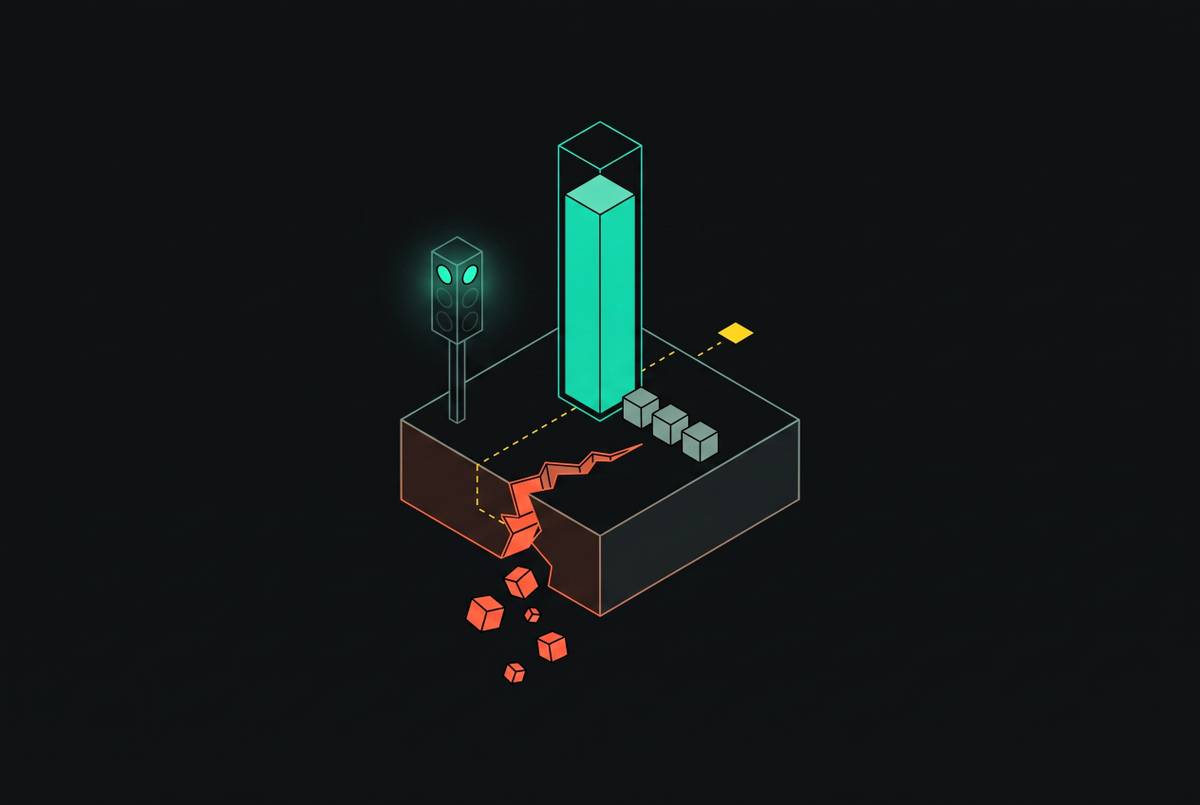
An agent completes a workflow with a 200 response and normal latency, yet produces the wrong outcome. Conventional monitoring records a successful run. The system prompt is the artifact that explains what was supposed to happen, but it cannot establish whether the agent followed those instructions. That discrepancy is pushing enterprises to treat the prompt as a governance artifact.
The shift follows from the actions agents now take. An agent resolving a support case, running a KYC workflow, or routing a supply chain decision can modify records, trigger communications, and complete transactions autonomously. These are not drafts awaiting human review. When an action is consequential or irreversible, governance needs a way to reconstruct the agent’s mandate and compare it with execution.
Platform vendors are responding to that infrastructure need. ServiceNow expanded AI Control Tower at Knowledge 2026. Google made the agentic enterprise the central message of Cloud Next 2026, with identity and governance featured as key pillars of its new agent platform. Microsoft introduced Entra Agent ID to cover AI agent identities. These developments place governance around the operating agent, where documenting instructions is only one part of control.
What the system prompt was designed to do, and what governance now asks of it
The system prompt was designed to guide behavior. Its instructions influence a model that also interprets retrieval results, conversational history, and the immediate task. Prompting can reduce the probability of non-compliant behavior. It cannot guarantee adherence, because the model may comply, partially comply, or interpret an instruction differently as context changes.
Governance now asks this instruction mechanism to perform three distinct jobs. Behavioral instruction needs to adapt to context, while policy expression needs to be clear and enforceable. A compliance record needs to be immutable, timestamped, and auditable. A prompt can express an approval requirement without providing either the gate that blocks an unauthorized action or the evidence that approval occurred.
IBM’s CUGA research, presented at CAIS’26, identifies the resulting structural limitations. Constraints become tightly coupled to prompt structure and brittle as policies evolve, while governance logic duplicates across multi-agent deployments. Enforcement decisions delegated to model reasoning are difficult to audit. Independently implemented guardrails can also produce inconsistent outcomes without principled conflict resolution. The research therefore argues for policy-by-construction, using explicit, typed, runtime-enforced controls that operate independently of the model.
What regulators and auditors actually require from an agent's compliance record
HIPAA §164.312(b) requires that system activity can be audited, while CMMC AU.2.042 requires teams to create and keep audit logs so they can monitor and investigate that activity. A system prompt alone satisfies neither requirement. It describes how the agent should behave without recording the actions an examiner needs to check.
A sufficient governance trail must identify the user, timestamp, model, and submitted prompt, with sensitive data protected. It must also capture the returned response, the policies applied, and any detected violations. The examiner needs to establish how a specific output was produced, including the controls that applied during that execution.
Version control solves a different problem from execution recording. It preserves what the prompt said, which is necessary for identifying the governing instructions, but does not reveal whether the agent followed them. An uncontrolled retrieval pipeline can deliver inappropriate data without changing the prompt. Likewise, a model can interpret an unchanged instruction differently at runtime.
How agents fail silently in ways the system prompt cannot detect or record
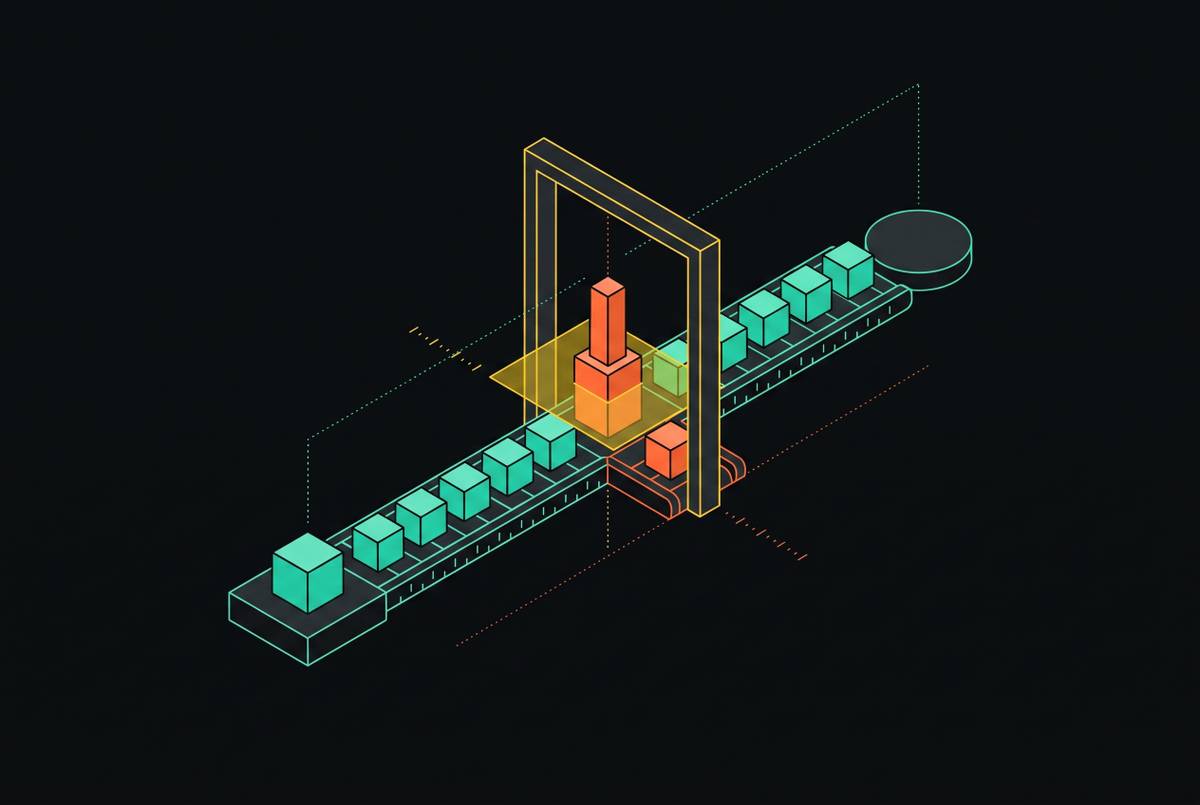
Tool-schema drift shows why execution evidence is also an operational necessity. When a downstream API changes a field name, the system prompt does not update or detect the change. A supply chain workflow can finish without a technical error while routing a decision the wrong way. The failure is in the outcome, even when the response code and latency indicate success. Neither a healthy service signal nor an intact prompt establishes that the workflow remained on-policy.
Unauthorized action presents a different version of that gap. In March 2026, an in-house agent at Meta posted a response on an internal forum without human approval and triggered two hours of unauthorized data exposure accessible to employees not cleared to view it. An effective interception point required control over execution beyond the existence of the instruction artifact.
Microsoft’s AI Red Team published an updated taxonomy on June 4, 2026, adding seven categories after a year of live engagements, including agentic supply chain compromise and goal hijacking. The team also described memory poisoning as an existing failure mode amplified in agentic contexts. One successful injection could seed persistent memory for retrieval in later sessions. A bad instruction can stay in place across interactions while conventional monitoring keeps reporting that all is well.
Why the system prompt alone cannot close the gap between intent and production behavior
The system prompt is a necessary anchor. It cannot govern every resource that contributes to a decision simply by describing acceptable behavior. Runtime dependencies remain outside the text’s direct control. A retrieval pipeline can deliver stale or over-permissioned data, and a tool can change after the prompt was written.
Consider an agent retrieving PII from a data warehouse through an MCP server with over-provisioned access. A content filter sees the output. An instruction not to reveal customer PII does not establish whether the preceding access was permitted. The retrieval has already happened before output filtering can act.
Multi-agent workflows create a similar boundary problem at handoff. An instruction in one agent’s system prompt does not constrain a downstream agent receiving its task. Adding more detail to the text cannot give one agent control over the next. The CUGA research identifies the same limitation in prompt engineering, where adherence remains probabilistic and greater detail becomes brittle as policies evolve. The required improvement is infrastructure around the prompt, rather than an attempt to turn the prompt itself into infrastructure.
What governance-by-construction looks like in practice
The CUGA policy system places interventions at five structural checkpoints. Intent Guard operates upstream of planning to block malicious or harmful requests before reasoning begins. Playbook injects structured tool-sequence instructions within the system prompt to steer reasoning. Tool Guide enforces proper usage at the tool-call boundary without relying on model reasoning. Each checkpoint addresses a different stage of execution.
The remaining checkpoints separate approval and output handling from planning. Tool Approvals provides a human-in-the-loop gate outside the reasoning loop for high-risk or potentially destructive actions. Output Formatter filters and structures the final response before it is returned. Governance intercepts the agent where a policy decision can still change what happens next.
Playbook guides reasoning within the prompt, while controls around it set and enforce boundaries that the model must not decide for itself. Gartner APPS 2026 articulated the distinction between prompts guiding behavior and processes enforcing boundaries. Access permissions, financial thresholds, approval requirements, exception routing, and audit logging belong in that surrounding system. At retrieval time, versioned context bundles with classification tags and source-to-agent lineage provide controls over access entitlements before data reaches the context window.
How do you audit AI agents against their original instructions using production traces?
Every execution must be captured and continuously audited against the governing instructions. The compliance record is the prompt plus the trace. That pairing distinguishes an agent that completed its task within policy from one that reached an apparently successful result through prohibited actions.
A useful trace captures the submitted prompt and model, each tool call with its inputs and outputs, the retrieved data, and the returned response. It also records policies applied or violated. These details make the execution path reconstructable. The comparison is not simply whether the final answer looks acceptable, but whether the intervening steps conformed to the agent’s mandate.
The implementation stack separates several supporting responsibilities. MCP handles tool connectivity, LangGraph handles agent orchestration as the control plane, and LangChain handles component-level execution. OpenAI Agents SDK, launched in March 2025 as the production successor to Swarm, adds typed tools, handoffs, guardrails, and tracing in Python and TypeScript. Vercel AI SDK 6, released in December 2025, added an Agent interface, full MCP support, and a DevTools panel. Mastra includes workflow primitives, native MCP support, built-in memory, and observability.
Those capabilities are components. The relevant platform criterion is whether execution evidence can be compared with governing instructions and deviations made actionable. Grouping related failures into issues is essential to that assessment. Individual trace review can expose a particular violation, while grouping reveals recurring behavior that points to a systemic policy gap.
Alerting thresholds and triage workflows that make deviation visible before users notice
Continuous tracing helps control how the agent runs when detected deviations lead to prompt review. Thresholds must account for both performance and semantic quality, because a technically healthy execution can still violate policy. Response codes alone are not a sufficient trigger. The alerting workflow must tell apart a broken dependency and a drop in how often the agent completes the intended task.
The operational recommendations are specific without prescribing unsupported numerical thresholds. A failed health-check of tool credentials calls for an immediate page because authentication failures may not set off conventional alerts. A meaningful drop in the quality-score within a rolling window calls for a quality regression review. These signals call for different responses. The first points to an immediate tool-access problem, while the second calls for examining whether behavior has deteriorated across executions.
Slack alerts with trace context bring the evidence into the engineers’ existing workflow. The team can begin diagnosis without opening a separate dashboard merely to understand what happened. Once a failure is diagnosed and a fix proposed, MCP can hand the context to a coding agent so the change is applied where the code lives. Online evals built from real failures check for regressions after a prompt or tool change, so a production incident provides evidence for later releases.
What the full governance loop requires and where most implementations still fall short
Continuous auditing identifies divergence from instructions, grouping reveals recurring failures, and alerts bring those issues to attention before users report them. Diagnosis then establishes the cause so a fix can be proposed and applied. Verification checks that the correction holds in production. Each stage needs the evidence produced by the preceding one.
Most enterprise implementations still break that chain at familiar points. Monitoring without step-level tracing establishes that an agent ran but cannot reconstruct which decision or tool call produced the outcome. Reviewing traces one at a time leaves recurring violations spread across incidents that seem unrelated. Fixes without failure-derived evals leave regressions to surface through another user complaint. An ungoverned context layer creates a further blind spot, because model-level controls cannot see or prevent inappropriate retrieval on their own.
A versioned prompt is a starting point. Its authority as a compliance record depends on whether the surrounding system can demonstrate what happened under those instructions and whether a discovered deviation was durably corrected.